Friday, December 13, 2013

How Ragtime Affected the Typical 20th Century Culture

Ragtime, or piano-rag was a very expressive genre of music and focused heavily on individuality. When this genre of music was first introduced, it was mainly populated by African-Americans. As ragtime began to spread throughout the nation, the audience became more diverse too. Although the audience of this music was changing, it was still mainly enforced by African-Americans. There is a rumor that ragtime got its name from the rags or pieces of cloth that the slaves wore when they were working in the fields.
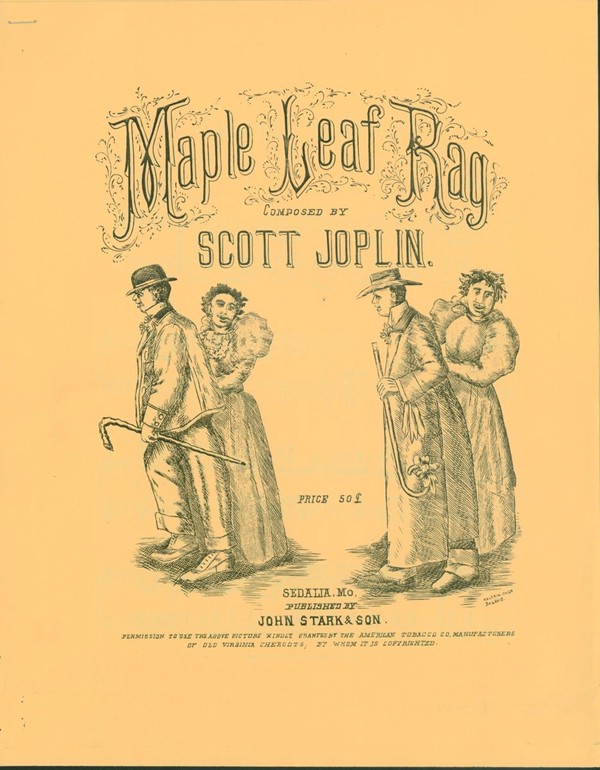
Ragtime was first introduced in the late 19th century and spread very rapidly during the early 20th century. One of the primary contributors to ragtime music was Scott Joplin. He was from Texarkana and learned to play piano and guitar at a very young age. Both of his parents were musical, his dad playing the violin and his mom playing the banjo and singing. During Joplin’s era, African-American pianists were not permitted to play in concert halls or places where white people gathered. Black musicians were most commonly found in churches, brothels, and red-light district bars. Scott Joplin changed this by playing in the Maple Leaf Club in Sedalia, Missouri. This sparked the idea of black musicians getting noticed by white people as serious musicians, rather than their precedents.
Many of the white people were not happy that ragtime was becoming socially acceptable in their establishments. They thought that “rag” music and the dancing that accompanied it were highly inappropriate. Keep in mind that during this time period most of the population went to church every week. They considered it evil and feared that it would sweep the nation and corrupt the young people. One person said, “It is an evil music that has crept into the homes and hearts of our American people regardless of race, and must be wiped out as other bad and dangerous epidemics have been eliminated.”

As you can see from above, ragtime was a very controversial and influential genre of music due to the fact that it promoted individuality and expressed new musical techniques that had not been traditional. When I say traditional, I am referring to the European style of piano playing. Ragtime differed from this style because it contained a syncopated beat, this is when you stress a beat that is generally weak. The ragtime player’s right hand would play the melody and their left hand would mash the keys to give it the ragged sound. Hiram Moderwell, a distinguished ragtime player, wrote “It has carried the complexities of the rhythmic subdivision of the measure to a point never before reached in the history of music. It has established subtle conflicting rhythms to a degree never before attempted in any popular music or folk-music. It has shown a definite and natural evolution--always a proof of vitality in a musical idea. It has proved its adaptability to the expression of many distinct moods.” 

mapleLeafRag_ragtimepiano_ca.jpg

music9618ragtime-morath-krma.jpg
music9618ragtime-morath-KRMA.jpg

Works Cited
Blue, Rose. "Chapter 7: From Ragtime and the Blues to Jazz." History of Gospel Music. By Corinne J. Naden. N.p.: n.p., n.d. N. pag. Print.
Chase, Gilbert. "Chapter 23: The Rise of Ragtime." America's Music, from the Pilgrims to the Present. 3rd ed. New York: McGraw-Hill, 1955. 413-27. Print.
Schmidt-Jones, Catherine. "Connexions." Connexions. N.p., 07 July 2011. Web. 13 Dec. 2013. <http://cnx.org/content/m10879/latest/>.
Schmidt-Jones, Catherine. "Connexions." Connexions. N.p., 15 Feb. 2013. Web. 09 Dec. 2013. <http://cnx.org/content/m10878/latest/>.

Retail, Advertising, Catalogs, Merchandising- Emily Evans

Emily Evans
December 12, 2013

The industry of retail, advertising and catalogs completely changed the culture of America in the early 1900’s.  Prices were going down and people were buying.  Everyone wanted to be up to date on the newest trends and latest technology. Catalogs and mail orders connected the rural areas to city life.  New ways of advertising spread the word on new products. The importance of shopping and retail came to life in this age.
Example of a catalog page
Before catalogs came around, rural families made everything for themselves. What they could not make, essentials such as sugar, flour, salt and pepper, they bought at a local store for high prices. If they needed to buy something from a larger store in the city, they had to take out a whole half of their day to travel there and back.  Even then, it all depended on if the roads were dry enough to travel on.  Mail orders made life easier for these people. Door to door salesmen came to these areas on small wagons or buggies. They brought catalogs filled with hundreds of pages of black and white product illustrations.  Catalogs were very exciting for these people, because the prices were lower than what they were used to, and there was so much more things to buy.  These catalogs created a higher standard of living for rural families.  Popular items were bicycles, ready-made clothing, shoes, food items and appliances. Sears created mail order plants, which made mail orders more efficient. They created a time scheduling system, which made the system a lot faster. Having access to all of the new styles and technologies connected the rural areas to modern city life.
Retail took off in the late 1800s to early 1900’s. No matter what class some one was, their wages were going up, so they had extra money to spend.  New department stores such as Macy’s, Bloomingdales, and Wannamaker’s changed the idea of fashion.  Before these stores took off, people had little clothing, made it themselves, and did not really care.  The whole idea of fashion started in this age.  The sudden access to cheaper clothing made shopping much more popular and enjoyable. Shopping became a fun, social scene that most women enjoyed in their free time. Style became much more important, so everyone was constantly buying. Large chain stores took off as well.  People were able to buy much larger quantities of food at one time, because there were now canned products, which they had never had before. The start of more modern refrigerators helped with that as well.  Since these stores were so large and everyone was buying, prices were able to be much lower than before.  At Sears, a man’s coat could be purchased for less than five dollars. Before these stores, a coat like that would have had to be hand made.
As more and more products were coming about, so were advertisements. The technology of printing had changed, making printing mass quantities much cheaper and easier. Advertisements were found in newspapers, journals, catalogs, on the radio and even before movies. Some journals people liked to read were The Saturday Evening Post and The Lady’s Home Journal. There were advertisements for clothing, home appliances, radios, movies, plays, food products, and especially automobiles.  Since automobiles were newly invented, they were starting to become very popular, which caused for more ads.  Coca-Cola took off in this time period, because of the advertising. It had been around for a while, but was marketed as a medicine to cure headaches.  It became much more popular when it was marketed as a “fun food”, and has been popular worldwide since then.

The idea of consuming and merchandising today, all started in this booming age. The department stores started over one hundred years ago have led to the department stores in America today. Some are still owned by the same company. Mail orders have transformed into ordering off the internet and having items delivered straight to your home.  Advertisements have grown incredibly since then, including billboards, movie previews, commercials, and ads in magazines. The same products are still being used and advertised, just modernized. A huge part of America’s culture started in this time period.  


Works Cited
"Advertising in the 1920s." Advertising in the 1920s. Ibis Communications, n.d. Web. 08 Dec. 2013. <http://www.eyewitnesstohistory.com/snpmech4.htm>.

LaMeau, Michele P. "Sears Shifts from Mail Orders to Retail Stores." Innovation Masters: History's Best Examples of Business Transformation. By Miranda H. Ferrara. Detroit: Gale, 2012. N. pag. Print.

"Media in the 1900s." ThinkQuest. Oracle Foundation, n.d. Web. 09 Dec. 2013. <http://library.thinkquest.org/27629/themes/media/md00s.html>.

Schmid, Jack. "Reaching Into Retail." Catalog Age Jan. 1999: n. pag. General OneFile. Web. <http://go.galegroup.com/ps/retrieve.do?sgHitCountType=None&sort=DA-SORT&inPS=true&prodId=GPS&userGroupName=avlr&tabID=T003&searchId=R6&resultListType=RESULT_LIST&contentSegment=&searchType=BasicSearchForm¤tPosition=3&contentSet=GALE%7CA54059380&&docId=GALE|A54059380&docType=GALE&role=ITOF>.

"Sears History - Early 1900s." Sears History - Early 1900s. Sears, n.d. Web. 12 Dec. 2013. <http://www.searsarchives.com/history/history1900s.htm>.
"Shopping in Rural Areas." Shopping in Rural Areas. N.p., n.d. Web. 12 Dec. 2013. <http://www.growingseasons.com/Growing_Seasons/Shopping_in_Rural_Areas.html>.

Pictue

http://www.pinterest.com/pin/218143175672670835/

http://www.pinterest.com/pin/218143175670669082/

http://www.pinterest.com/pin/218143175670668851/


Leisure Tme


 NEW TIMES NEW LEISURE

 The 1920's era of the United States was one of the most revolutionary times across the board for 

American and the world in general, form new companies coming into the scene to new sports being played. 

The Roaring 20's was the time to live for the average American. The economy was growing and introducing 

more money across the board of wealth and classes.
 
New companies began to evolve, along with this new lifestyle; But instead of following the times these

companies were driving the populations interest. Companies such as Black and Decker arose in this time 

period adding more gadgets to the average persons life. There was now a rising abundance of malls and 

shops allowing for more currency exchange. Manufacturers began to take advantage of this new era and 

began making their own products along with the production of others. The American public then saw these 

items and purchased them at a rate never before seen through the middle to lower classes.

 Americans had changed their fundamental work values and ethics with the new era. Instead of work 

as hard as possible then go to bead and start over again until the weekend they now wanted to play first 

then work, not unlike today's society. This new change once again drove up the wants of the American 

public; they wanted new things to do and were willing to pay to get it.

This was made possible by the fact that the economy had shot up, allowing for more commerce not 

only within the country but also across it. All this new money had been earned by the middle class society.  

This was made possible because of the new workers laws that included a minimum wage and maximum 

hours limitations. As to be expected the minimum wage being set made it where workers salaries had been 

risen. The maximum hours law gave Americans more free time which once again added interest into the 

leisure time.

Less hours and more money lead Americans to be more inclined to spend more of their money of 

leisure products. But as the times were changing along with the new work ethic something else changed, 

how Americans wanted to spend their free time. Pre-1900's leisure time was spent alone in the confines of 

the house relaxing, but the change took a more modern approach Americans now wanted to go out and 

shop or go watch a baseball game. Americans now had the money to do this and the free time to go.

American pass-times had been irreverent pre-1900's but now they hit the old cliche of the "American 

Pass-time". They now had money and time to do what they wanted, spectator sports came into play as 

Americans needed more to do. Baseball became the most common sport played because of its simple goal.  
Games would be watched in envy and excitement much like modern sports today, little has changed from 

the spectators side.

America hit its biggest economic boom in the 1920's with this brought a treasure trove of changes 

across the board. The American population had to evolve in order to keep up with this new era which was a 
total role reversal from previous years. The United States has changed little since the last major revolution. 

what is next?
http://i.cdn.turner.com/si/multimedia/photo_gallery/1102/mlb-milestone-contracts/images/babe-ruth.jpg

http://www.portsmouthmuseums.co.uk/collections/images/Eastney_2002-660_CULLIMORE%20SHOP.jpg

Works Cited
Brinkley, Alan. American History. New York: McGraw-Hill, 2007. Print.
Davis, Clark. JSTOR. N.p., n.d. Web. 12 Dec. 2013.
Fischer, Claude S. JSTOR. N.p., n.d. Web. 12 Dec. 2013.
"The Golden Age of Sports: A Roaring Replay of the 1920's." The Golden Age of Sports: A Roaring Replay of the 1920's. N.p., n.d. Web. 12 Dec. 2013.
"Google Books." Google Books. N.p., n.d. Web. 12 Dec. 2013.
"How Did Americans Enjoy Their Leisure Time in 1920s?" Yahoo! Answers. Yahoo!, n.d. Web. 12 Dec. 2013.
Lloyd, Timothy. JSTOR. N.p., n.d. Web. 12 Dec. 2013.
"The Roaring 20's." Angelfire.com. N.p., n.d. Web.

The Development of Skyscrapers (Katie An)

When you go to a big city, there are skyscrapers everywhere. For many people, especially those in larger cities, life without skyscrapers would not be the same at all. These massive buildings used to not be a part of our daily lives. Due to massive developments in the 1880s, skyscrapers were not only made possible, but they were going up faster and in larger numbers than ever before. Though there were some issues to take into consideration as the skyscrapers became taller, overall it was a positive development. Today skyscrapers are very beneficial and important to the function of many cities, even though there are some cons to these giant buildings. 

There were many things that allowed for the growth in skyscrapers. One of the most important new developments though, was the mass production of steel; this process was called the Bessemer process. Without the new techniques to mass produce, there would have never been enough steel to construct all of the buildings. Another new invention was a safety feature on the elevator. Elevators had been around for years, and were normally powered by steam. They were not used for people though, only things like taking factory items to a different floor. The issue with elevators was that if a cable were to break, they plummeted to the bottom of the elevator shaft. Elisha Graves Otis created a safety for the elevator. This meant that even if a cable broke, the elevator would not fall. It was also helpful to have electric lighting in these buildings. Now that there was the capability to build a skyscraper, there also needed to be a demand, and there was. The white collar work- force was growing quickly and needed office space. In the big cities, there were so many people, that they had no where else to build, except up. These skyscrapers became work spaces that sold out very quickly. 

Many famous skyscrapers were built between 1880- 1920. These buildings include the Flat Iron Building (612 feet,) which is a famous building in Times Square, NYC. In addition, the Metropolitan Life Insurance Company Building (700 feet) and the Woolworth Tower (792 feet) were also built in this time. Skyscrapers such as the Empire State Building and the Chrysler Building were not built until 1930. In New York City, buildings were much taller than they were in Chicago. Another difference between the New York City skyscrapers and the Chicago ones was many people considered Chicago's skyscrapers to be prettier than New York's. As these massive buildings went up, New York was criticized for having ugly towers, instead of the aesthetically appealing buildings that Chicago was building. 
Flat Iron Tower 20th Century

Flat Iron Tower Today
Metropolitan Life Tower 20th Century

Metropolitan Life Tower Today


Woolworth Tower 20th Century


Woolworth Tower Today

Part of the reason that New York was building all of the taller buildings, was Chicago put a 150 foot height limit on their skyscrapers. This meant that New York City was left to build all of the extremely tall buildings.Chicago's buildings tended to be wider skyscrapers, while New York's were skinnier. During this time, the creation of a steel frame became essential to building sturdy, practical, tall buildings. The frames used to be held by giant walls on the lower floors of the buildings. This not only limited height, but also limited floor space on the lower floors. Once this problem was eliminated, the skyscrapers not only became more spacious, but also taller allowing for more office buildings on the top floors. Though this seemingly fixed one problem, it also created another. As the buildings began to mold what we know as New York's skyline, they also began to destroy what was known as the skyline in the 19th and 20th centuries. Aside from the aesthetic change, these buildings were also casting really bad shadows, and people were complaining about loss of light and air. A specific example of this is the 538 foot equitable building which cast a 7 acre shadow. Due to these issues, the idea of zoning was born and the Tenement House Act of 1901 was created limiting the size of the skyscrapers. For many years this was effective, but after the population grew over 3 million people in 100 years, the laws changed a little bit. 
Chicago Skyscrapers

New York Skyscrapers 


Today, skyscrapers are extremely important to city life. Without them, we would not have nearly as much office space, and many times living space. While they are great for space, and many times they are much prettier these days, occasionally they do pose some issues. One statistic says that about 70% of landfills is building debris. A man named Phillip Fisher, who is an architect, believes that skyscrapers are just objects and they are part of the object "life cycle." He thinks that this "life cycle" takes the object from materials, to parts that give it its shape, to the assembly line, and then it becomes junk. He also thinks that after 25 years, many skyscrapers are useless. Though there are obviously many many skyscrapers that have not fallen, turned into junk, or gone to the landfill after 25 years, it is a possibility. This also represents an opinion that is not similar to the majority of people's. Some people love skyscrapers, but most people just do not think  about it that in depth, to many, it is just a building. There are people though, who feel strongly that skyscrapers are not a good thing, and those are some of the reasons why. 

Overall, the development of skyscrapers has been a very good thing for our country and many other countries. It allows for massive growth in places with limited space. Throughout the years though, the ways we build, view, and use skyscrapers has changed. The skyscraper received its name in 1888, and in that time "skyscraper" was a word used to describe a building that was 10-20 stories, when these days it describes a building that is typically 40-50 stories. In addition, skyscrapers used to just be used as office spaces, but we now use them as residential space too.. Finally, for the most part, steel used to be the only material used, but now concrete and glass are also very popular materials when building skyscrapers. 
Steel Frame Design developed in the late 19th and early 20th century, paired with the modern day building material, glass. 


Though there will always be cons, or issues brought up when developing something new, many times the outcome is worth it. In this case, that is very true. There were problems that arose during the development of skyscrapers such as loss of lighting and air, but this is something that was overcome. In today's world, the main complaint about skyscrapers would be that they end up in landfills or they are just "junk," yet they are still a huge part of our world. City life would not be possible without skyscrapers. 


Works Cited
Barrs, Karen. "The History of Skyscrapers." Infoplease. Infoplease, n.d. Web. 12 Dec. 2013. <http://www.infoplease.com/spot/skyscraperhistory.html>.
"Bessemer Process (metallurgy)." Encyclopedia Britannica Online. Encyclopedia Britannica, n.d. Web. 9 Dec. 2013. <http://www.britannica.com/EBchecked/topic/63067/Bessemer-process>.
"Early Skyscrapers." Wikipedia. Wikimedia Foundation, 12 Oct. 2013. Web. 13 Dec. 2013. <http://en.wikipedia.org/wiki/Early_skyscrapers>.
"Lawrence Nield on the Impact of Skyscrapers Official." Dailymotion. N.p., n.d. Web. 12 Dec. 2013. <http://www.dailymotion.com/video/xhqxc0_lawrence-nield-on-the-impact-of-skyscrapers_creation>.
"NYC Zoning - About New York City Zoning." NYC Zoning - About New York City Zoning. The City of New York, n.d. Web. 9 Dec. 2013. <http://www.nyc.gov/html/dcp/html/zone/zonehis.shtml>.
"Skyscraper (building)." Encyclopedia Britannica Online. Encyclopedia Britannica, n.d. Web. 13 Dec. 2013. <http://www.britannica.com/EBchecked/topic/547956/skyscraper>.
Photos