Monday, December 16, 2013

Entertainment


John Parvin McBride
D Block
10-16-13
Entertainment

Between the years of the late 1800’s early 1900’s the entertainment business was becoming popular. Jazz and movies were starting to emerge. People like the idea of entertainment to escape from their daily lives. Now that leisure was a common thing amongst all social classes people had more time to create and participate in entertainment. 
One of the most popular forms of entertainment was jazz. People would host dance parties and dance to this new found music. Louis “Satchemo” Armstrong became a very well known jazz musician. He was an African American trumpet player that people were becoming fond of. People enjoyed his charismatic stage present and that he was a skilled scat singer. 
Dancing was another form of entertainment that people enjoyed partaking in. People of middle class started having big society dinners and balls that would end in dancing. The Fox Trot become a popular dance. It started appearing all over the world in places like New York Theatre. People enjoyed listening to the piano and jazz music while dancing. Some people would listen and play the piano for hours.
During this time period people also started to listen to the radio much more often. The radio became popular during the 1920’s because people were able to have radios in the comfort of their own homes. The radio would have unscheduled musical performances, speeches, phonograph concerts, and sports scores. This provided an a source of entertainment that did not take a lot of effort to get and could be easily accessed.
Movies started to appear more often during this time period. This was a way for people to escape their own lives and learn about others. Movies were created to relate with what was happening at the point in the world.  People started to fall in love with specific actors and actresses. One particular actress that was popular was Gloria Swanson. Her first appearance was in 1914 when she signed with Paramount Pictures. She was always known for her beads, jewels, and peacock and ostrich feathers. Another incredibly famous actor from this time was Charlie Chaplin. Charlie Chaplin started appearing in films in 1910. He started at a young age and instantly become a well-known actor. People loved to see his comedic and over dramatic roles that they could still relate to.
Entertainment was important to people during this time period. It gave them a way to escape their daily lives, relax, and enjoy things. The thoughts of celebrities started to appear during this time with the likes of Gloria Swanson and Charlie Chaplin. People could enjoy entertainment in there own homes or use it as a social outing now that leisure started to become part of the norm. 


http://www.darkbeautymag.com/wp-content/uploads/2012/10/Edward-Steichen-Gloria-Swanson.jpg
 http://www.charliechaplin.com/en/biography/articles/21-Overview-of-His-Life


Works Cited 
“Charlie Chaplin.” Wikipedia. N.p.: n.p., n.d. Wikipedia. Web. 16 Dec. 2013. <http://en.wikipedia.org/wiki/Charlie_Chaplin>.
“Charlie Chaplin: Biography.” Charlie Chaplin. N.p., n.d. Web. 16 Dec. 2013. <http://www.charliechaplin.com>.
“Gloria Swanson.” Wikipedia. N.p.: n.p., n.d. Wikipedia. Web. 16 Dec. 2013. <http://en.wikipedia.org/wiki/Gloria_Swanson>.
“How did popular entertainment devolp during this period.” BBC. N.p., n.d. Web. 16 Dec. 2013. <http://www.bbc.co.uk/schools/gcsebitesize/history/tch_wjec/usa19101929/3culturesocietychanges3.shtml>.
“Louis Armstrong.” PBS. N.p., n.d. Web. 16 Dec. 2013. <http://www.pbs.org/wnet/americanmasters/episodes/louis-armstrong/about-louis-armstrong/528/>.
“Popular Entertainment.” History Tody. `, n.d. Web. 16 Dec. 2013. <http://www.historytoday.com/dick-geary/popular-entertainment-class-and-politics-munich>.


Friday, December 13, 2013

Crime and Scandals

Caroline Webster
December 13, 2013
American Superiority
During the turn of the century the American president at the time, Holding was eager to help the American Economy and restore business a condition he called “normalcy”. At the time many Americans were undergoing changes, a result of many workers going on strikes, the spike in crime rates and Scandals.
During 1880 and 1910 there were about 17 million European immigrants that entered the United States, the growing number forced the crime rate to rise and leave more people jobless. America’s population and growing industry caused exports and imports to become a major part of the economy. Smuggling was a result of the rising number of exports and imports, people would soon hear of the underworld parlance, the Black market, whether it was narcotics or goods. The Gilded Age consisted of American cities that had grown more deadly than cities such as Paris, Vienna and London. The number of crimes spiked before the great depression in 1916 there were more than 8,372 homicides in comparison to England which was only 196. Sixty years ago scandals, crime and trials would shape America to be known as the superiority in criminal violence.
The wealthy survived the turn of the century the best during this point in American history however; the poor are not the only group who would face felonies. H.H Holmes (Herman Webster Mudgett), the first American serial killer was born into a wealthy family and very intelligent at his young age. When Herman was a child he always had an interest for the study of Medicine. His gruesome childhood activities included trapping animals and performing surgery’s on them, and after investigations it has even been suggested and thought that he killed a high school classmate. After graduating from high school he pursued the career of a pharmacist and then began his killing career to steal people’s property. H.H Holmes later built a house known as the “murder castle” where there were sound proof rooms, doors that could be locked from the outside, and gas rooms where he would kill his victims. After he confessed to 130 murders, the supreme court was astonished, some researchers even believe that it he easily killed over 200 people and this event would cause a new perspective and demand for protection and officers.
Scandals during the early 1920’s such as the Teapot Dome scandal, also known as the oil reserves scandal, the Black Socks scandal, and the gang war are a part of substantive criminal law. Felonies and misdemeanors such as these drift away from the peace and prosperity that Holding strived for. The Tea Pot Dome scandal was the secret leasing of federal oil reserves, congress directed the President to cancel the leases and the Supreme Court declared the leases fraudulent. The Black Sox Scandal, an American baseball scandal was the theory that eight players were bribed to lose the game in 1919 to the Cincinnati Reds. Gamblers were entering the field of athletics, resulting in the seven players that were suspended. The gang war engulfed New York the newspaper kept track of the deaths like keeping track of baseball scores.
The tremendous growth in crime in the United States surpassed every other country during the turn of the century and eventually led to the Great Depression. A time of misconduct and fortune lead to the idea of wealthy vs. poor survival of and the survival of the fittest.


Works Cited 
"Britannica Mobile Edition." Britannica Mobile. Encyclopedia Britannica, n.d. Web. 13 Dec. 2013. <http://m.search.eb.com/topic/68298/Black-Sox-Scandal>. 
Placko, Dane, and Rory Hood. "Chilling Tour inside Serial Killer H.H. Holmes` `Murder Castle` - Chicago News and Weather | FOX 32 News." Chilling Tour inside Serial Killer H.H. Holmes` `Murder Castle` - Chicago News and Weather | FOX 32 News. Fox Television Stations, 29 Apr. 2013. Web. 11 Dec. 2013. 
Stanley, Tim. "Too Close to Home." History Today. History Today, n.d. Web.13 Dec. 2013. <http://www.historytoday.com/tim-stanley/too-close-home>. 
When Political Crimes Are Inside Jobs: Detecting State Crimes against Democracy
Lance deHaven-Smith
Administrative Theory & Praxis , Vol. 28, No. 3 (Sep., 2006), pp. 330-355
Published by: M.E. Sharpe, Inc.
Article Stable URL: http://www.jstor.org/stable/25610803


Women's Suffrage

Brittany Morgan
U S History                                                                                         
City-Life Project
Women’s Suffrage     
                                                           
                                                                                                                                                          
            “We hold these truths to be self-evident, that all men are created equal, that they are endowed by their creator with certain unalienable Rights, that among these are Life, Liberty, and the pursuit of Happiness.”
 – United States Declaration of Independence

            Throughout the late 1800’s and early 1900’s, women’s attitude towards themselves started to change. As a result, women were seemingly on the road to achieving professional, legal, and educational equality with men. Before, women’s goals were to marry, have children, and obey their husbands. Even though this movement was very empowering to women’s rights, some women as well as most men did not follow suit. With the determination of pro-suffrage women, the new time era, and the NAWSA, women established a new life for themselves.
            During the year of 1900, 20% of the women in the U.S. were employed away from their homes. Between 1880 and 1910, the number of women employed in the U.S. increased from 2.6 million to 7.8 million, due to the increased availability for women to receive education on the elementary, secondary, and collegiate level. A census taken in 1890 reported that women were represented in 360 occupations out of 369 although, most employed women worked in textile and factory work with lower paid tasks, as the majority of better paying jobs continued to go to men, and had little chance for advancement. More and more women began to devote their lives to their careers instead of the stereotypical image of cooking, cleaning, and raising children at home. As well as profession, women gained legal rights. States began to modify common law to give women more legal power. Wives were given control over their inheritance and earnings and even in some states women were given a chance of winning at least joint custody of their children in the case of divorce, which one in twelve relationships in 1905  ended because women “found their voice”. By 1896, women had gained the right to vote in four states: Wyoming, Colorado, Idaho, and Utah. By 1913 nine states (all in the west) gave women the vote, but in 1917 the tenth was New York (east). Legislative support for women’s voting rights produced the 19th amendment passed by Congress on June 4, 1919 but ratified on August 18, 1920.  
            The National Women’s party created a special flag to publicize and commemorate the ratification process. A star was placed on the flag for each state in which women were enfranchised. A new star was added for each state that ratified the nineteenth amendment. Photographs of sewing on new stars (as inserted above), provided rich promotional for the party’s ratification campaign. Public images , at the time, were very influential on women of the era. Images that pictured healthy and athletic women simply dressed caused women to abandon petticoats and ribbon gowns. Instead, women slowly started to wear tailored suits and blouses.
 During the 1800’s and early 1900’s, women and women’s organizations such as the NAWSA (National American Woman Suffrage Association) founded in 1890, not only worked to gain the right to vote, they also worked for broad-based economic and political equality and for social reforms. Unlike gossip groups or tea parties before, the clubs focused on women’s concerns and rights. By the beginning of the new century, women’s clubs in towns and cities across the nation were working to promote suffrage, better schools, the regulation of child labor, women in unions, and liquor prohibition. More women’s organizations began to appear. Organizations brought public attention to issues varying from women’s suffrage to poor factory working conditions. The significance of the useful movement brought public support and demand for improved conditions. Just as the women’s suffrage movement came alive, an opposing movement, anti-suffrage was created in 1871. Anti-suffragists associated feminism with mental illness. All women, they felt, were weak minded, frail, physically weak, vulnerable, and intellectually inferior to men. They felt that it was their duty to protect women from evil things like voting, in which could possible contaminate them too. Women who upheld traditional gender roles argued that politics were improper for women represented by the struggle for political, economic, and social equality was as threatening to women as it was to men.
                                                                

Sheffield, Wesley. "The Women's Movement." N.p., Mar. 2012. Web. 12 Dec. 2013.
"Women's Suffrage." Loc.gov. N.p., n.d. Web. 12 Dec. 2013.
"Women Suffrage in the Progressive Era - American Memory Timeline- Classroom Presentation | Teacher Resources - Library of Congress." Women Suffrage in the Progressive Era - American Memory Timeline- Classroom Presentation | Teacher Resources - Library of Congress. Loc.gov, n.d. Web. 10 Dec. 2013.
Brinkley, Alan. N.p.: n.p., n.d. Print.


Restaurants, Menu and Cookery

Andrea Damunt 

In the 18h and the 19th Century, many things changed. One of these changes was when the word Menu started to be used. They described this word as a “limited, choicely selected meal”. That’s true, when we go to a restaurant we can only order what is in the Menu.  By then, the paper was expensive so most of the public eating places wrote on a board what they were going to be serving that day. In the cheapest eating places the day’s offerings were recited verbally at the door, because some people could not read.   
When we go out to eat we order what we like but at the same time we try to look at all prices and try not to choose an expensive dish.  In the 19th Century, they could eat a meal for only a nickel, the things listed in the Menu cost only 5 cents.  Bread usually accompanied all of the meals. This tradition still in use now, when we go to a restaurant, without necessarily ordering bread, they bring it to the table to go with the meal.  
Restaurants which were situated around colleges supplied not only food, but entertainment such as books and cards.  Public eating places started to be a social place, where people went to hang out with friends while eating or drinking something.  Women always had a male companion who ordered their dinner.  Some restaurants did not even admit women without a male companion.  All over the years became more acceptable for women to dine out without a man.  Pubs and Bars were usually male social places, were they could hang out with others and drink.  Women in the 19th Century began dinning out for pleasure. Common places for women to meet were the tearooms, where they could talk and gossip while they were drinking a cup of tea.  
People who suffered a disease such as celiac or diabetes did not usually eat out, because at that time restaurants were not prepared to attend all allergies. They could not eat package food neither because there were many ingredients in. They ate plain vegetables, fruit, meat, fish, eggs and rice. Now most restaurants are prepared to attend all allergies, they even have separated Menus for some of them.  
They did not have the same facilities to cook, as we have now.  They usually cooked in open fires and pick up water from wells. Some people had their own gardens and small farms which provided them food, if they did not have this choice, they had to go to the public markets were some stalls sold vegetables, meat, fish, and bread. The traditional American Thanksgiving Menu had the main things that most American families eat on those dates. Their Menu consisted in roasted stuffed turkey, some sides and pies. It was more less the same but without all casserole dishes and all sides that Americans have now.
The other main thing in cookery was the measurements. Liquids could be measured in tin cups. Cups could be in graduated sets or some of them had rings around them to designate the amount of liquid.  Dry foods such as flour or sugar were measured in pounds rather than cups.
Many things have changed since then, we have more facilities. We have lots of new cooking machines which help us to make more complex recipes. Prices have increased, that’s why some families who cannot afford eating out at restaurants have to eat at home. Public eating places are still being a social place to go and hang out even if it’s just to drink refreshment.  


WORK CITED
"19th Century Cookery." 19th Century Cookery. N.p., n.d. Web. 12 Dec. 2013.
"Discovery Health." Discovery Fit and Health. N.p., n.d. Web. 12 Dec. 2013.
"The Lady Will Have the Prawns." Chow The CHOW Blog. N.p., n.d. Web. 12 Dec. 2013.
"Tag Archives: 19th Century." Restauranting through History. N.p., n.d. Web. 12 Dec. 2013.
PICTURES

Caroline Justice
Frank Lloyd Wright
                From the beginning, Anna Lloyd Jones Wright wanted her son to be an architect. Frank Lincoln Wright (later changed to Frank Lloyd Wright) was born on June 8, 1867. He went to the University of Wisconsin, where he majored in engineering, but he dreamed of going to Chicago because that is where big buildings were happening. Frank Lloyd Wright changed American architecture in a way no one had done before him and no one has done since. He is known as the best architect in American history because of what he has done for our country and because of his downright passion for his job.
                In all of his buildings, Frank Lloyd Wright wanted to connect America the country with America the people, whether they were enjoying our country outside or sitting in their living room. He spelled Nature with a capital “N”, which shows what he was trying to do. He shoved aside hand-me-down European-style architecture and strived to create something brand new, which celebrated daily lives of Americans. His work has been called the “basis on 20th century residential design”. He designed 800 buildings, 280 of which still stand, almost a century later. He strived to meet physical, social, and spiritual needs of Americans in the buildings he created instead of just making an enlarged shoebox like most of our buildings are today.
                Frank Lloyd Wright viewed his work as nothing less than an art form. He balanced natural and artificial light to create what is called “organic architecture”. Frank Lloyd Wright had a passion for creating art in the form of buildings. He didn’t treat it like a job because that’s not what it was to him. He wanted what he did to last and matter and mean something to anyone who saw it. He even said, “What is architecture anyway? ... Varying tastes of the various lords of man kind? I think not. No, I know that architecture is life; or at least it is life itself taking form and therefore it is the truest record of life as it was lived in the world yesterday, as it is lived today, or ever will be lived… So, architecture I know to be a Great Spirit.” He viewed his job as a physical being! This shows that he cared about architecture more than anything in the world. He knew what he did would outlast him and change our country for the better by giving it an architectural identity.

                I think that everyone should strive to find something that they are this passionate about. Presidents and movie stars are very well known, but architects don’t become architects because they want to be famous. It takes an extreme amount of creativity and drive to achieve his amount of fame in a career like his. If everyone in the world cared about their occupation the way Frank Lloyd Wright did, the world would be a much better place.


Bibliography- Frank Lloyd Wright Nash, Eric Peter., and Frank Lloyd Wright. Frank Lloyd Wright: Force of Nature. New York: Smithmark, 1996. Print. "Frank Lloyd Wright Foundation : Overview." Frank Lloyd Wright Foundation : Overview. Frank Lloyd Wright Foundation, n.d. Web. 12 Dec. 2013. <http://www.franklloydwright.org/about/Overview.html>. Kaufmann, Edgar. "Britannica School." Britannica School. Britannica, n.d. Web. 12 Dec. 2013. <http://school.eb.com/levels/high/article/77556>. Columbia University, Press. “Frank Lloyd Wright.” Columbia Electronic Encyclopedia, 6Th Edition (2013): 1. History Reference Center. Web. 12 Dec. 2013

Ellis Island 

             Ellis Island has not always represented a place of welcoming freedom to represent America.  It was just a three acre island in the harbor of New York, barley visible at high tide. It was named Oyster Island by the early Dutch settler and then in 1765 called Gibbet Island.  In the late 1700’s a man named Samuel Ellis bought and finally owned the bank of the land which he built a tavern on.  Once Samuel passed away his family sold the plot of land to the New York City subway lines.  This helped bring Ellis Island to the size of 27.5 acres as it stands today.  This was made by two adjoining artificial islands added onto the the original three acres.  A new beginning was coming toward Ellis Island's way.  Once the Government heard about this new land on the bank of New York they agreed to reopen the station under the condition that the next building built would be fireproof. In 1887 the original immigration station burned down after five years of it being open and they did not want to take the chance of having another accident.  
Immigrants began to poor into this small little island being carried in on steamships.  Most of the immigrants came from North Europe and in the the later decades Eastern and Southern Europeans began to come in.  Most of the people carried on the ships had first and second class tickets with the exception of a few known as “steerage” or third class tickets.  As soon as the arrived the many inspections, tests, and questions began.  
All of the immigrants were immediately brought into the Great Hall and checked for any speech problems, eye problems, mental issues, and diseases.  The doctors would have about nine seconds to check each person who came through giving them marks with calk on their clothing.  Most of the time the doctors would draw an “X” on the immigrant if the saw any of these problems occurring.  Most of the clever immigrants would wipe off the chalk or flipped over the clothing once they realized what it meant.  Those who were ill they would either ship them back or nurse them back to health.  Checking of the luggage was the next point in these peoples lives and this greatly scared those who spoke a different language because they could not understand why they were taking their belongings from them.  This brought a lot of confusion and fear into the already so hard procedures.  Not only did they have go through all of that but they also had to take intelligence tests which were not so hard to fail.
There were many broken hearts and dashed dreams every single time a ship came through yet there were also many joyful hearts crying with tears of joy.  Those with the crushed dreams were either sent back home or had to watch their loved ones be sent back home.  Imagine a mother having to go into the United States living her ten year old daughter to be shipped back having to fin for herself.  That is an example of the kind of things that actually did happen during this time.  Only a 30% of the people who came through each time were allowed to stay in the states.  This shows how many were present with illnesses or no education in these foreign countries.  
Immigrant processing was transferred over seas consulates in 1924 leaving Ellis Island with very few immigrants coming through.  Its only use was for emergency need such as housing war refugees and training the Coast Guard service men during WWII.  Ellis Island had been a place used by armed forces as well in WWI.  The reason not as many immigrants were coming was because this made it much harder for immigrants to get through to the United States than before.  In 1954 the building was closed and left there until in the late 1980’s they began restoring it into a museum and it was opened in 1990.  It was going to be sold including 35 buildings, 2 war tanks, thousands of feat of chain link fencing, and a ferry.  Then in 1965 President Johnson declared the Statue of Liberty apart of Ellis Island.  A private funder gave $160 million to the Statue of Liberty and the Ellis Island Foundation.  
Ellis Island made the impact as to where there are two million visitors per year come through to look at this historical landmark.  It still stays in the hearts of people as a symbol of a great life and a new journey that is ahead which was the immigrant process.  It represents freedom and new opportunities and has changed America in a whole new way.  Ellis Island is a place that We as a nation should be proud of and it is important to see what a long way it has come from a 3 acre piece of land, to an immigration station, to now a place people love to visit and a way to enter into the United States with much improvements than before. 


Works Cited 

Kanjilal, Deboleena. "Ellis Island – Faiths and Freedom." Faiths and Freedom RSS. N.p., n.d. Web. 13 Dec. 


"Ellis Island – Faiths and Freedom." Industrial Cultural Center, 2001. Web. 13 Dec. 2013 

Parrish, Ann. "Ellis Island." History Reference Center. EBSCO, 2013. Web. 12 Dec. 2013. 


"Chapter 6: Arriving at Ellis Island." Everyday Life: Immigration, 1999. N.p.: n.p., n.d. 42. History 


Tindall Morring
12/13/13
                Places like Coney Island really affected the lives of people. When people had jobs like working in factories they would only get Sundays off and they would spend that time at home just resting. People believed that if you had enough leisure time to go out do things you were not working hard enough for your family and you were lazy. Coney Island helped to change all of that. Work hours finally became shorter and people began to go to Coney Island, get out of the house, have fun and escape the big city. These people were no longer looked at as lazy and more people began to visit. Leisure time slowly began to change and people started spending their time of work at places like Coney with friends and family rather than in their own homes just resting.
Coney Island started off as nothing but a long strip of beach outside of Brooklyn New York. Coney was created as a place where people could escape their everyday life and get away from everything. It was only a train ride away from the city and very quickly became of a hot spot for upper class people. In a quote by James Gibbons Huneker he says, “When you are at Coney you cast aside your hampering reason and become a plain lunatic.” And that was exactly what began to draw people to Coney. Coney Island not only was an amusement park full of big rides and many games but had luxurious hotels right near the beach and great restaurants. The long strip of beach also drew many people to Coney when it was warm to swim and lay on the beach after hours of riding rides and playing games. Coney Island having hotels became a huge change for people back then because instead of just staying the day people would come and stay the weekend away from their own homes, it was like a weekend getaway. People called Coney the “Playground of the World” and that is what it was. Coney Island was where people could get away from the stress and craziness of the city, let their hair down, relax and just have fun. Coney was one of the first things that really changed people view of leisure at the time. People began to go out to places like Coney Island with friends and family instead of just staying home and resting during their time of work. As times began to change and people had more time off of work leisure time was no longer looked at as lazy, people looked forward to it and this only brought more and more people to Coney Island.
                Coney Island had evolved so much from what it used to be in its beginning years. Coney is still the “Playground of the World” and people still come to escape the stress of the city but a lot has changed. After World War II Coney Island was neglected and began losing lots of business but it never died. The park built itself back up and is still becoming bigger and more popular. People said after it was neglected for so long it almost had a renewed sense of hope as it began to build itself back up. To this day there are now 64 rides in total inside the park. They are so many new games and new restaurants too. People now travel from all over the country on vacations to visit Coney Island to ride its huge roller coasters and stay in the amazing hotels. Unlike it used to be, Coney is now open all during the week so whenever people need that escape Coney is only a car or subway ride away. It is also open all throughout the winter now and even though the beach are cold and the rides are closed people can still walk all along the beach boardwalk and enjoy the ocean view. Coney Island is open on many popular holidays now like memorial and labor day weekend and they even have a new event called, “Halloween in Coney” There are so many events going on all the time at Coney, things like outdoor concerts, film festivals and many fireworks shows. The B&B Carousel is the last remaining historic carousel in all of Coney Island. When Coney began to grow they restored the carousel and moved into the new Steeplechase Plaza, where it now sits today. Coney Island is bigger and much more modern today but people still visit it for the same reasons, to be with friends and family and just have fun.

                 Coney Island still has the same effects on people modern day as it did back in the beginning of its life. People’s views of leisure time have changed a lot since and Coney helped to change that but changed it for the better. People still visit the Island to escape the stress and just enjoy time with friends or family. Coney has grown a lot over the years but that has only drawn more people to it. Its luxurious hotels are always filled with people and there are always crowds waiting in those lines for the rides. It is still only a short ride away from the still and people still return in their leisure time. Coney will always be an escape from the city and where people can come to relax, not worry about anything and have a great time.  

Works Cited
 Coney Island. The parachute pavillion, n.d. Web. 12 Dec. 2013. <http://www.vanalen.org/parachutepavilion/background.htm>.
 A Coney Island Education. Sarah Lawrence Collge, n.d. Web. 12 Dec. 2013. <http://www.slc.edu/news-events/archived/2010-2011/2010-10-04-a-coney-island-education-mag.html>.
 Coney Island History Site. Westland, n.d. Web. 12 Dec. 2013. <http://www.westland.net/coneyisland/>.
 Fun Guide. Coney Island, n.d. Web. 12 Dec. 2013. <http://coneyislandfunguide.com/Attraction/BB-Carousell.htm>.
 History Reference Center. Alabama Virtual Library, n.d. Web. 12 Dec. 2013. <http://web.ebscohost.com/hrc/results?sid=99d66b38-b4af-4ee2-9cfe-2dfca3cba003%40sessionmgr4002&vid=2&hid=4106&bquery=coney+island&bdata=JmNsaTA9RlQmY2x2MD1ZJnR5cGU9MCZzaXRlPWhyYy1saXZl>.
 modernization of America. wed.edu, n.d. Web. 12 Dec. 2013. <http://web.wm.edu/americanstudies/370/2007/sp8/history.html>.
 Princeton.edu. Princeton University, n.d. Web. 11 Dec. 2013. <http://www.princeton.edu/~achaney/tmve/wiki100k/docs/Coney_Island.html>.

http://goldenagedames.wordpress.com/2011/07/21/vintage-new-york/

How Ragtime Affected the Typical 20th Century Culture

Ragtime, or piano-rag was a very expressive genre of music and focused heavily on individuality. When this genre of music was first introduced, it was mainly populated by African-Americans. As ragtime began to spread throughout the nation, the audience became more diverse too. Although the audience of this music was changing, it was still mainly enforced by African-Americans. There is a rumor that ragtime got its name from the rags or pieces of cloth that the slaves wore when they were working in the fields.
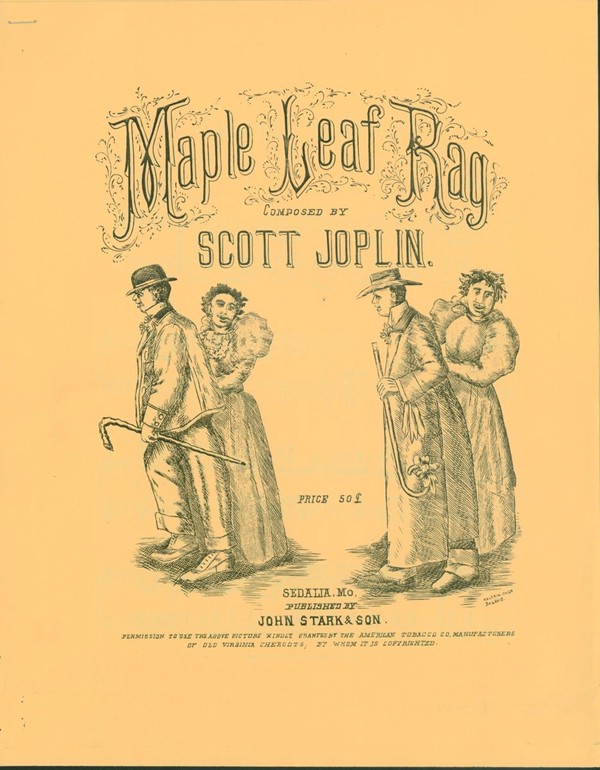
Ragtime was first introduced in the late 19th century and spread very rapidly during the early 20th century. One of the primary contributors to ragtime music was Scott Joplin. He was from Texarkana and learned to play piano and guitar at a very young age. Both of his parents were musical, his dad playing the violin and his mom playing the banjo and singing. During Joplin’s era, African-American pianists were not permitted to play in concert halls or places where white people gathered. Black musicians were most commonly found in churches, brothels, and red-light district bars. Scott Joplin changed this by playing in the Maple Leaf Club in Sedalia, Missouri. This sparked the idea of black musicians getting noticed by white people as serious musicians, rather than their precedents.
Many of the white people were not happy that ragtime was becoming socially acceptable in their establishments. They thought that “rag” music and the dancing that accompanied it were highly inappropriate. Keep in mind that during this time period most of the population went to church every week. They considered it evil and feared that it would sweep the nation and corrupt the young people. One person said, “It is an evil music that has crept into the homes and hearts of our American people regardless of race, and must be wiped out as other bad and dangerous epidemics have been eliminated.”

As you can see from above, ragtime was a very controversial and influential genre of music due to the fact that it promoted individuality and expressed new musical techniques that had not been traditional. When I say traditional, I am referring to the European style of piano playing. Ragtime differed from this style because it contained a syncopated beat, this is when you stress a beat that is generally weak. The ragtime player’s right hand would play the melody and their left hand would mash the keys to give it the ragged sound. Hiram Moderwell, a distinguished ragtime player, wrote “It has carried the complexities of the rhythmic subdivision of the measure to a point never before reached in the history of music. It has established subtle conflicting rhythms to a degree never before attempted in any popular music or folk-music. It has shown a definite and natural evolution--always a proof of vitality in a musical idea. It has proved its adaptability to the expression of many distinct moods.” 

mapleLeafRag_ragtimepiano_ca.jpg

music9618ragtime-morath-krma.jpg
music9618ragtime-morath-KRMA.jpg

Works Cited
Blue, Rose. "Chapter 7: From Ragtime and the Blues to Jazz." History of Gospel Music. By Corinne J. Naden. N.p.: n.p., n.d. N. pag. Print.
Chase, Gilbert. "Chapter 23: The Rise of Ragtime." America's Music, from the Pilgrims to the Present. 3rd ed. New York: McGraw-Hill, 1955. 413-27. Print.
Schmidt-Jones, Catherine. "Connexions." Connexions. N.p., 07 July 2011. Web. 13 Dec. 2013. <http://cnx.org/content/m10879/latest/>.
Schmidt-Jones, Catherine. "Connexions." Connexions. N.p., 15 Feb. 2013. Web. 09 Dec. 2013. <http://cnx.org/content/m10878/latest/>.

Retail, Advertising, Catalogs, Merchandising- Emily Evans

Emily Evans
December 12, 2013

The industry of retail, advertising and catalogs completely changed the culture of America in the early 1900’s.  Prices were going down and people were buying.  Everyone wanted to be up to date on the newest trends and latest technology. Catalogs and mail orders connected the rural areas to city life.  New ways of advertising spread the word on new products. The importance of shopping and retail came to life in this age.
Example of a catalog page
Before catalogs came around, rural families made everything for themselves. What they could not make, essentials such as sugar, flour, salt and pepper, they bought at a local store for high prices. If they needed to buy something from a larger store in the city, they had to take out a whole half of their day to travel there and back.  Even then, it all depended on if the roads were dry enough to travel on.  Mail orders made life easier for these people. Door to door salesmen came to these areas on small wagons or buggies. They brought catalogs filled with hundreds of pages of black and white product illustrations.  Catalogs were very exciting for these people, because the prices were lower than what they were used to, and there was so much more things to buy.  These catalogs created a higher standard of living for rural families.  Popular items were bicycles, ready-made clothing, shoes, food items and appliances. Sears created mail order plants, which made mail orders more efficient. They created a time scheduling system, which made the system a lot faster. Having access to all of the new styles and technologies connected the rural areas to modern city life.
Retail took off in the late 1800s to early 1900’s. No matter what class some one was, their wages were going up, so they had extra money to spend.  New department stores such as Macy’s, Bloomingdales, and Wannamaker’s changed the idea of fashion.  Before these stores took off, people had little clothing, made it themselves, and did not really care.  The whole idea of fashion started in this age.  The sudden access to cheaper clothing made shopping much more popular and enjoyable. Shopping became a fun, social scene that most women enjoyed in their free time. Style became much more important, so everyone was constantly buying. Large chain stores took off as well.  People were able to buy much larger quantities of food at one time, because there were now canned products, which they had never had before. The start of more modern refrigerators helped with that as well.  Since these stores were so large and everyone was buying, prices were able to be much lower than before.  At Sears, a man’s coat could be purchased for less than five dollars. Before these stores, a coat like that would have had to be hand made.
As more and more products were coming about, so were advertisements. The technology of printing had changed, making printing mass quantities much cheaper and easier. Advertisements were found in newspapers, journals, catalogs, on the radio and even before movies. Some journals people liked to read were The Saturday Evening Post and The Lady’s Home Journal. There were advertisements for clothing, home appliances, radios, movies, plays, food products, and especially automobiles.  Since automobiles were newly invented, they were starting to become very popular, which caused for more ads.  Coca-Cola took off in this time period, because of the advertising. It had been around for a while, but was marketed as a medicine to cure headaches.  It became much more popular when it was marketed as a “fun food”, and has been popular worldwide since then.

The idea of consuming and merchandising today, all started in this booming age. The department stores started over one hundred years ago have led to the department stores in America today. Some are still owned by the same company. Mail orders have transformed into ordering off the internet and having items delivered straight to your home.  Advertisements have grown incredibly since then, including billboards, movie previews, commercials, and ads in magazines. The same products are still being used and advertised, just modernized. A huge part of America’s culture started in this time period.  


Works Cited
"Advertising in the 1920s." Advertising in the 1920s. Ibis Communications, n.d. Web. 08 Dec. 2013. <http://www.eyewitnesstohistory.com/snpmech4.htm>.

LaMeau, Michele P. "Sears Shifts from Mail Orders to Retail Stores." Innovation Masters: History's Best Examples of Business Transformation. By Miranda H. Ferrara. Detroit: Gale, 2012. N. pag. Print.

"Media in the 1900s." ThinkQuest. Oracle Foundation, n.d. Web. 09 Dec. 2013. <http://library.thinkquest.org/27629/themes/media/md00s.html>.

Schmid, Jack. "Reaching Into Retail." Catalog Age Jan. 1999: n. pag. General OneFile. Web. <http://go.galegroup.com/ps/retrieve.do?sgHitCountType=None&sort=DA-SORT&inPS=true&prodId=GPS&userGroupName=avlr&tabID=T003&searchId=R6&resultListType=RESULT_LIST&contentSegment=&searchType=BasicSearchForm¤tPosition=3&contentSet=GALE%7CA54059380&&docId=GALE|A54059380&docType=GALE&role=ITOF>.

"Sears History - Early 1900s." Sears History - Early 1900s. Sears, n.d. Web. 12 Dec. 2013. <http://www.searsarchives.com/history/history1900s.htm>.
"Shopping in Rural Areas." Shopping in Rural Areas. N.p., n.d. Web. 12 Dec. 2013. <http://www.growingseasons.com/Growing_Seasons/Shopping_in_Rural_Areas.html>.

Pictue

http://www.pinterest.com/pin/218143175672670835/

http://www.pinterest.com/pin/218143175670669082/

http://www.pinterest.com/pin/218143175670668851/